How Travel Fatigue Metrics Reshape Probability Models in International Basketball Leagues
Écrit par Otto Werner · 2/9/2026
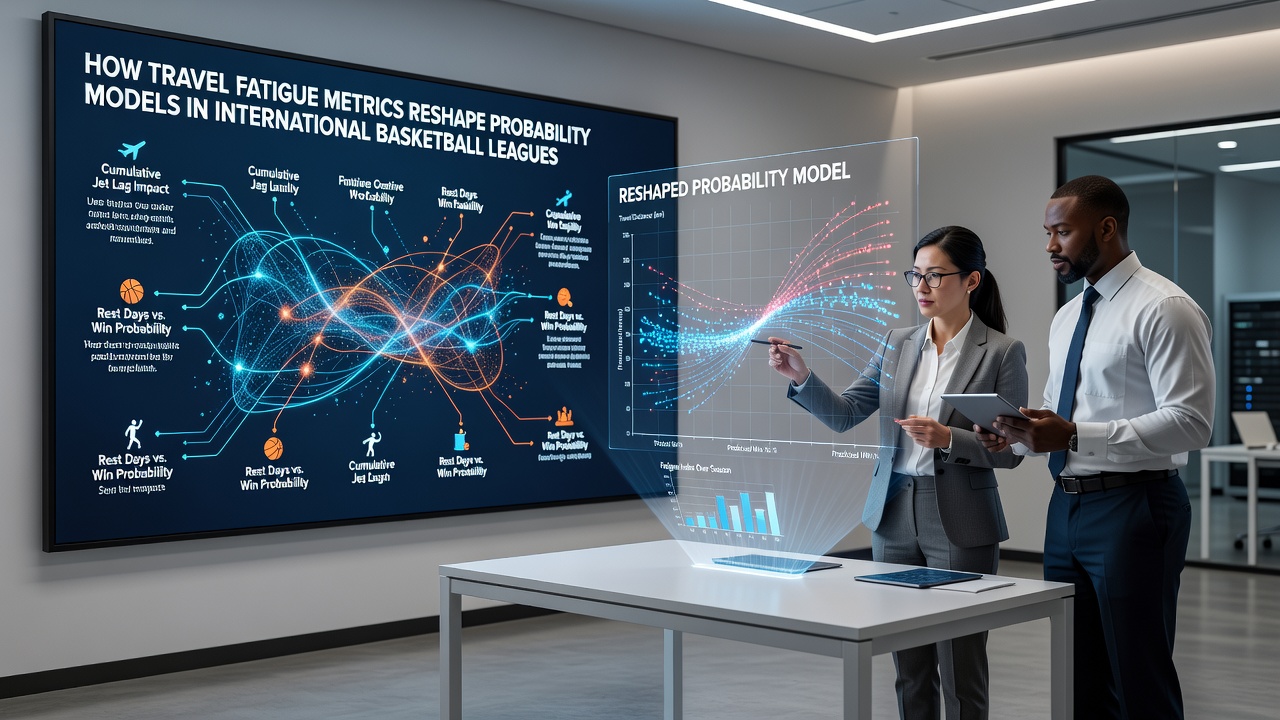
How Travel Fatigue Metrics Reshape Probability Models in International Basketball Leagues
Travel fatigue has long influenced outcomes in international basketball competitions, yet recent advances in data collection have allowed analysts to integrate these factors directly into probability models that forecast game results across leagues such as the EuroLeague, FIBA competitions, and cross-continental tournaments. Researchers track variables including flight duration, time zone shifts, sleep disruption, and recovery windows, then feed those numbers into algorithms that adjust win probabilities for visiting teams. Data shows that teams crossing more than four time zones experience measurable drops in shooting accuracy and defensive efficiency during the first 48 hours after arrival, while shorter domestic flights produce smaller but still detectable effects.
Key Metrics Driving Model Adjustments
Organizations monitoring player performance compile datasets that combine GPS-tracked travel logs with biometric readings from wearable devices, creating standardized fatigue scores that range from zero for rested home squads to higher values for teams arriving after overnight flights. Studies conducted by the Australian Institute of Sport reveal that cumulative travel distance over a two-week period correlates with a 6 to 9 percent decline in field goal percentage when athletes exceed 10,000 kilometers. These figures enter probability models as weighted coefficients that lower expected points scored by fatigued lineups and raise the likelihood of turnovers under pressure.
Analysts also incorporate circadian rhythm data, noting that games scheduled between 2 p.m. and 6 p.m. local time produce the steepest performance gaps for teams that have traveled eastward. Models recalibrate baseline win rates by applying multipliers derived from historical matchups, and the adjustments become more pronounced during condensed tournament schedules where recovery days shrink below 72 hours.
Integration into League Forecasting Systems
Probability platforms employed by international basketball federations now treat travel fatigue as a dynamic input rather than a static variable, allowing real-time updates when flight schedules change or weather delays extend layovers. In September 2026, several EuroLeague clubs began sharing anonymized biometric data through a centralized database managed by the European College of Sport Science, enabling modelers to refine fatigue thresholds before the start of the 2026-2027 campaign. The resulting forecasts show tighter margins for away teams in back-to-back games that involve multiple time zones, while home-court advantages widen when opponents arrive with elevated fatigue scores.
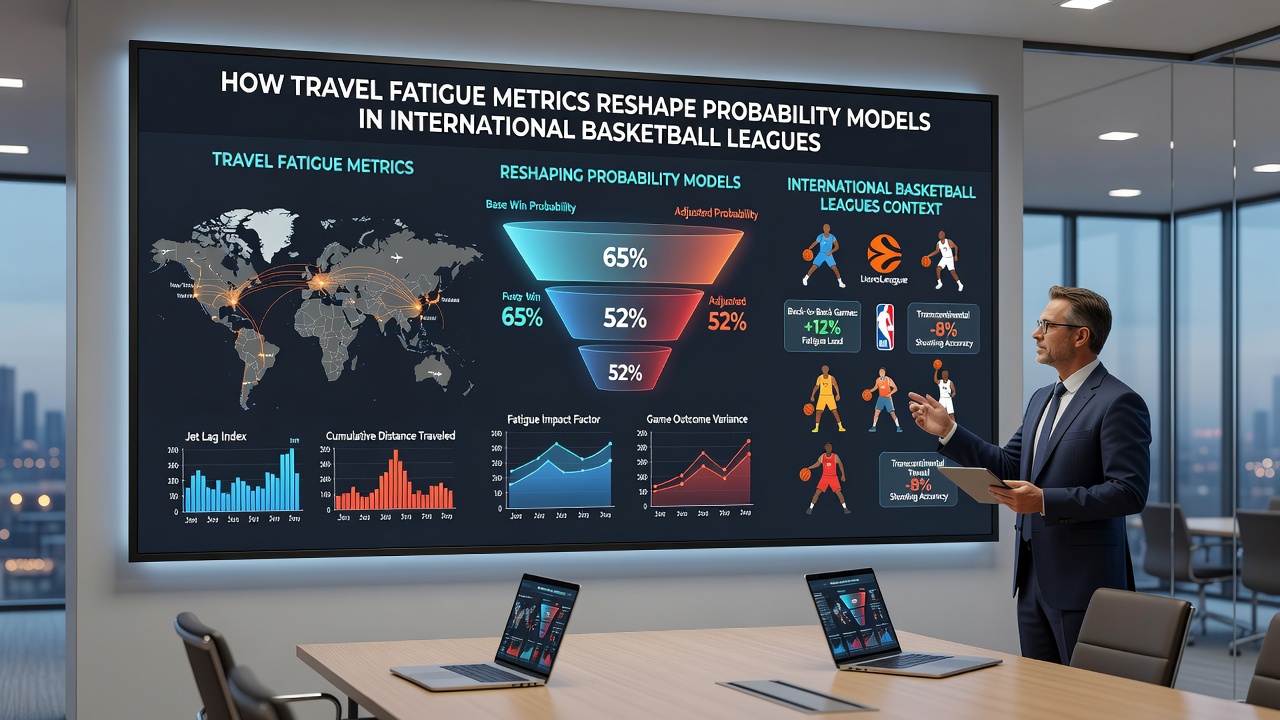
Case examples illustrate the shift. One study of FIBA World Cup qualifiers found that teams flying from South America to Europe adjusted their expected scoring output downward by 11 points per game when models accounted for 12-hour time shifts, compared with earlier projections that ignored travel. League statisticians in Canada and Australia have adopted similar frameworks, cross-referencing their domestic data with international benchmarks to produce unified metrics that travel across different competition calendars.
Impact on Scheduling and Preparation Protocols
Basketball federations respond to these modeling changes by altering arrival protocols, mandating earlier team departures for high-fatigue matchups and extending acclimatization periods when possible. Training staffs use the same fatigue scores to modify practice intensity, reducing high-impact drills on the day after long-haul flights while prioritizing light shooting sessions that preserve energy stores. Observers note that these adjustments appear in updated probability outputs, where visiting teams scheduled under revised protocols show smaller performance penalties than in previous seasons.
External validation comes from sources such as reports issued by the International Olympic Committee’s medical commission, which document consistent patterns across multiple sports yet highlight basketball’s particular sensitivity to eastward travel because of its reliance on precise shooting mechanics. Model builders incorporate these independent datasets to calibrate their coefficients, ensuring that fatigue adjustments reflect peer-reviewed findings rather than league-specific assumptions alone.
Conclusion
Travel fatigue metrics have moved from peripheral considerations to core components within probability models used across international basketball leagues. By quantifying flight distances, time zone crossings, and recovery windows, analysts produce forecasts that better reflect real-world conditions encountered by traveling teams. Continued data sharing initiatives, including those launched ahead of September 2026, promise further refinements as leagues integrate biometric inputs from additional competitions worldwide.